

Quick answer
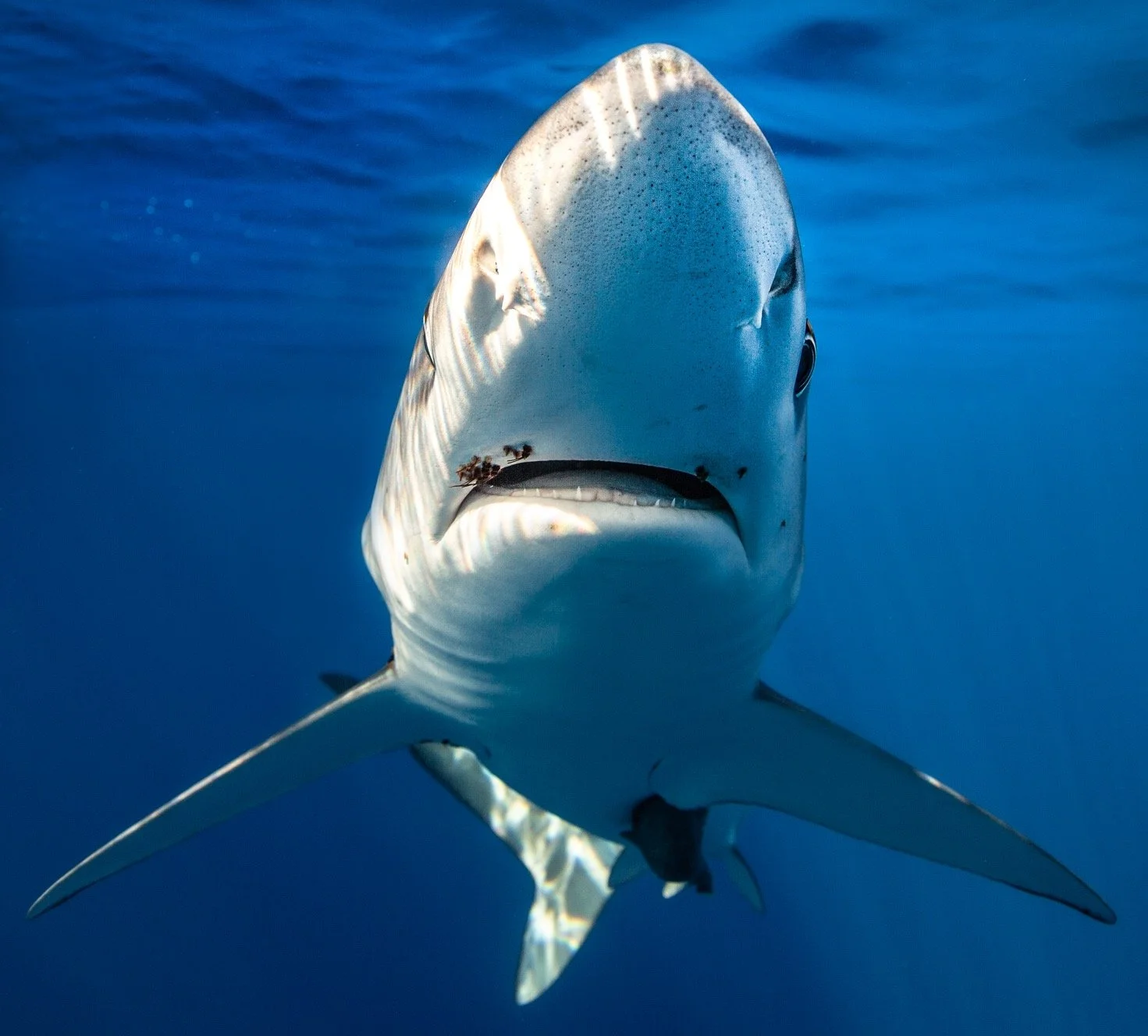
Yes, there are sharks in the Azores—primarily blue sharks, shortfin makos, and occasional hammerhead and whale sharks. Blue sharks are the most commonly encountered species during organized diving excursions between June and October. These animals pose minimal risk to humans when observed under supervised conditions, and attacks remain statistically negligible across the archipelago's recorded maritime history.
The Azores archipelago supports one of the Atlantic's densest seasonal concentrations of blue sharks, with individuals migrating through the island chain during summer and early autumn months. Researchers estimate several thousand blues pass within recreational diving range of Faial and Pico each year, feeding on squid and small pelagic fish along the submarine ridges that encircle the islands. Shortfin mako sharks frequent deeper offshore waters surrounding the archipelago, typically beyond the continental shelf at depths exceeding 200 meters. Surface encounters remain rare, though sport fishing crews occasionally document makos during marlin and tuna seasons. Hammerhead sightings occur sporadically near Princess Alice Bank, a submerged seamount 80 kilometers southwest of Faial, where nutrient upwellings attract schooling fish and the predators that follow them. Whale sharks appear infrequently, usually as solitary transients rather than resident populations. Dive operators in Horta and Madalena run shark-observation excursions under strict protocols established by regional marine authorities. Participants descend to 12-15 meters in open water while crew distribute bait to attract blues within visual range. The sharks circle at a distance of three to five meters, exhibiting natural feeding behavior without physical contact. No cages are used, and safety briefings emphasize neutral buoyancy and calm movement to avoid startling the animals. Local fishing communities report stable shark populations across recent decades, with no documented unprovoked attacks on swimmers or surfers in Azores territorial waters. The archipelago's volcanic topography creates deep channels close to shore, meaning sharks rarely venture into shallow coastal zones where recreational bathers congregate. Storm surges and strong currents present greater statistical hazards to ocean users than marine fauna. Snorkelers exploring coastal reefs and tidepools encounter smaller species like dogfish and catsharks, neither of which display aggression toward humans. Are there sharks in the Azores that warrant concern during typical beach visits? The evidence suggests recreational ocean use carries negligible shark-related risk when standard maritime precautions are observed.
“The Azores host one of the Atlantic's densest seasonal concentrations of blue sharks, with several thousand individuals migrating through the island chain each summer.”
Are There Sharks In The Azores? Understanding Local Species
The Azores archipelago hosts a significant diversity of shark species, with at least 37 species recorded in its surrounding waters. These marine animals include both wide-ranging pelagic predators that inhabit the open ocean and deep-sea species residing in the deep-water habitats of the Mid-Atlantic Ridge.
Scientific surveys have documented at least 37 species of sharks and 13 species of rays within the archipelago's waters. This high diversity reflects the region's position as a critical node in North Atlantic migratory routes.
Blue shark prominence
The blue shark is the most abundant pelagic shark species in the region and is frequently observed during the warmer months. These animals are known for their deep blue coloration and are a primary focus for specialized observation tours.
Shortfin mako presence
Shortfin mako sharks are another common pelagic predator encountered in the deep waters surrounding the islands. They are known as the fastest of all shark species and share the deep-ocean environment with blue sharks.
Smooth hammerhead habitats
Juvenile smooth hammerheads are frequently found in the region, which serves as an important habitat area for their development. They are often seen in coastal and seamount areas during the summer.
Whale shark aggregations
The Azores acts as an important feeding area for whale sharks, which are seasonally observed around the islands. Sightings of these giants have increased in recent years, often associated with shifts in regional water temperatures.
Deep-sea shark variety
When To Visit For Optimal Conditions To See Sharks In The Azores
The period between July and September offers the most reliable conditions for observing sharks in the Azores due to warmer water temperatures and increased pelagic activity. Visitors should aim for the arrival window of 09:00–17:00 to ensure optimal visibility and calm sea conditions for excursions.
July–September
Moderate to high operator activityWater temperatures 22°C–24°C; stable seas
Daily 09:00–17:00
Variable based on operator schedules—; Best time for visibility and calm water conditions
October–November
Lower operator frequencyCooler water 19°C–21°C; higher swell potential
Fewer excursions, though sightings remain possible.
Verdict: The best time for shark observation is from July to September, specifically within the 09:00–17:00 arrival window.
Are There Sharks In The Azores Costs Or Entrance Fees?
Access to the natural marine environment of the Azores is free of charge. Costs are only associated with organized boat tours and professional diving services.
There is no entrance fee to the marine environment, though visitors typically pay for third-party boat operators or dive centers to access specific observation sites.
Are There Sharks In The Azores Monitoring And Access Hours?
The marine environment of the Azores is accessible to observers and researchers throughout the week. Access is available at all hours, though specific observation activities align with recommended daylight conditions.
| monday | 00:00–23:59 | |
|---|---|---|
| tuesday | 00:00–23:59 | |
| wednesday | 00:00–23:59 | |
| thursday | 00:00–23:59 | |
| friday | 00:00–23:59 | |
| saturday | 00:00–23:59 | |
| sunday | 00:00–23:59 |
Preparation Checklist For Those Wondering Are There Sharks In The Azores
Shark encounters in the Azores require advance planning, proper gear, and tour bookings.
-
Book a guided shark tour — Tours operate daily but require advance reservation for boat availability
-
Confirm wetsuit and snorkel equipment — Most operators provide gear, but verify inclusion when booking
-
Pack reef-safe sunscreen and seasickness tablets — Ocean conditions can be choppy during transit to dive sites
-
Bring certification cards if scuba diving — Blue shark dives often require Open Water certification or equivalent
-
Arrive between 09:00–17:00 for departures — Optimal visibility and calm seas occur within this window
-
Check weather forecasts 48 hours prior — Tours may cancel due to rough seas or poor visibility
-
Carry valid photo ID and booking confirmation — Required for check-in at marina departure points
Check availability
Frequently Asked Questions About Sharks in the Azores
Everything you need to know about are there sharks in the azores